Hair Transplant in Scars
What is a Hair Transplant in Scars?
A scar hair transplant is a surgical procedure where healthy hair follicles are taken from a donor site (usually the back or sides of the scalp) and carefully implanted into the scarred area. Once transplanted, these follicles develop their own blood supply and begin to grow naturally.
Unlike standard hair transplants done for pattern baldness, a scar hair transplant requires more precision because scar tissue is less flexible, has reduced circulation, and may not always support grafts as well as normal skin. However, with modern methods, excellent results are possible.
Who Can Benefit?
- ✅ Accident or injury scars on the scalp, beard, or face
- ✅ Surgical scars, such as from neurosurgery or cosmetic procedures
- ✅ Burn scars where hair no longer grows
- ✅ Linear scars from old FUT hair transplant methods
- ✅ Cleft lip scars affecting moustache growth
As long as healthy donor hair is available, most patients are good candidates.
How the Procedure is Done
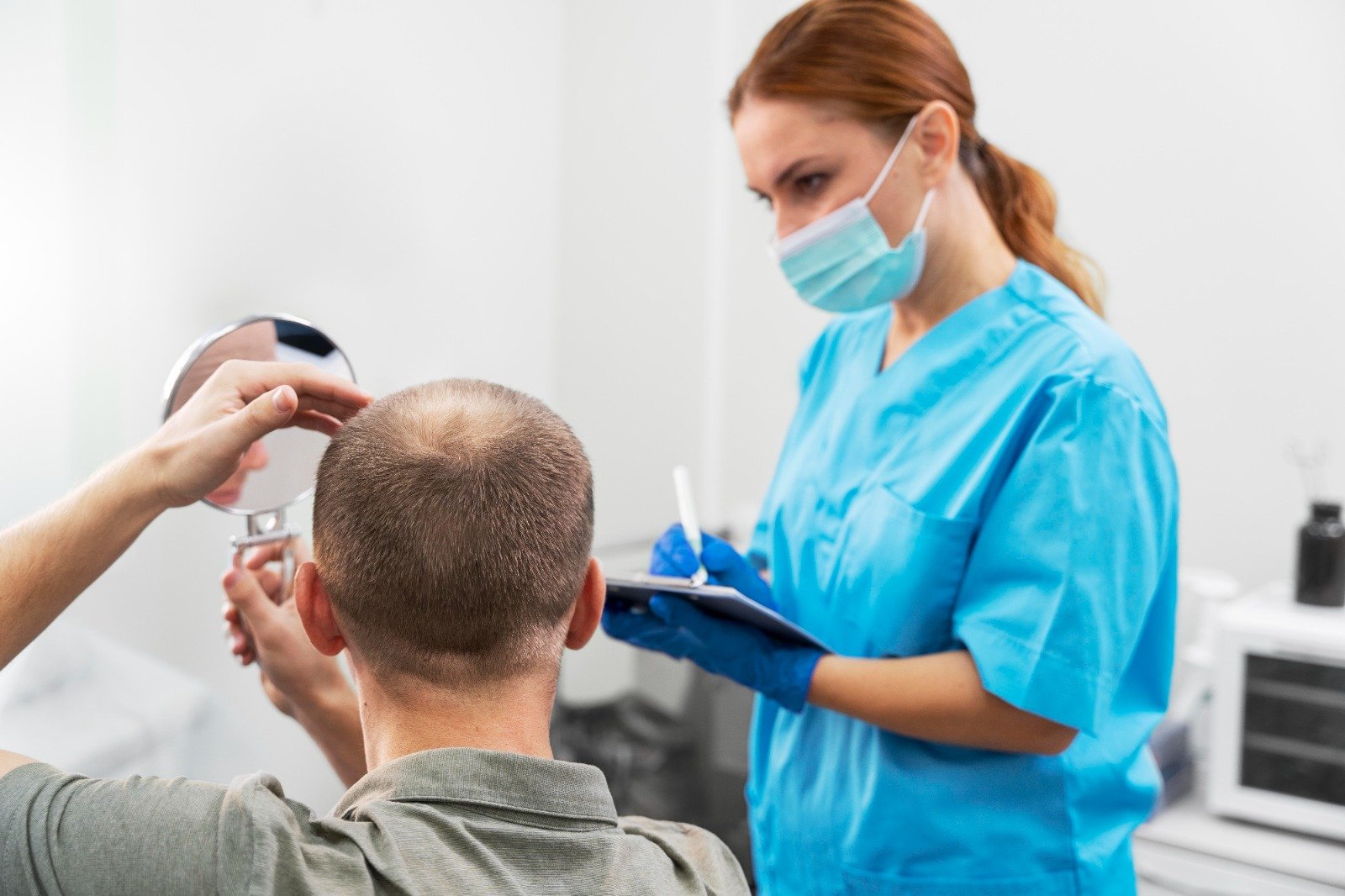
Consultation and Evaluation
The surgeon examines the scar to assess thickness, flexibility, and blood supply. Some scars may require pre-treatments like laser therapy or microneedling before transplantation.
Donor Hair Extraction
Hair follicles are taken from the back or sides of the scalp using FUE (Follicular Unit Extraction) or FUT (Follicular Unit Transplant). FUE is more common as it leaves minimal scarring.
Preparation of the Scar Area
Tiny incisions are made in the scar tissue, with care to match the natural angle and direction of surrounding hair.
Graft Implantation
Follicles are implanted carefully into the scar. Since blood flow is lower in scar tissue, precision placement is key for graft survival.
Recovery and Growth
Transplanted hairs shed within 2–3 weeks (a normal stage). New growth begins in 3–4 months, with full results visible in 9–12 months.
Advantages
- ✅ Restores natural appearance by covering scars
- ✅ Boosts confidence and self-esteem
- ✅ Permanent results, with hair growing normally
- ✅ Can be done on scalp, beard, moustache, or eyebrows
- ✅ Minimal downtime, normal activities resumed in days
Challenges and Limitations
- ⚠️ Reduced blood supply in scar tissue can affect graft survival
- ⚠️ Larger scars may need multiple sessions
- ⚠️ Density may not perfectly match surrounding hair
- ⚠️ Thick or keloid scars may not support transplantation
A skilled surgeon will assess each case and may recommend combining the procedure with other scar-reducing treatments.
Recovery and Aftercare
- ✅ Mild swelling, redness, or scabbing for a few days
- ✅ Avoid touching, scratching, or rubbing the area
- ✅ Gentle washing after 3–5 days
- ✅ Avoid strenuous activity and sunlight for 2 weeks
- ✅ Final growth results visible within 9–12 months
Results You Can Expect
The goal is a natural-looking blend where scars become less noticeable. While full coverage isn’t always possible with very large or thick scars, most patients experience significant improvement. The transplanted hair grows permanently and can be cut, styled, or shaved like normal hair.
Frequently Asked Questions (FAQs)
1. Can hair really grow in scars after a transplant?
Yes. Once healthy hair follicles are transplanted, they establish a blood supply and grow naturally, even in scar tissue.
2. Are results permanent?
Yes. The transplanted hair continues to grow permanently as it is taken from areas resistant to hair loss.
3. Is the procedure painful?
No. The surgery is performed under local anesthesia, with little to no pain during the procedure. Mild discomfort afterward can be managed with medication.
4. How many sessions are needed?
It depends on the scar size and type. Small scars may be treated in one session, while larger scars may need multiple sessions for best results.
5. Can any type of scar be treated with a hair transplant?
Most scars can be treated, including those from accidents, burns, or surgery. However, very thick, raised, or keloid scars may not be suitable. A surgeon will evaluate before recommending treatment.