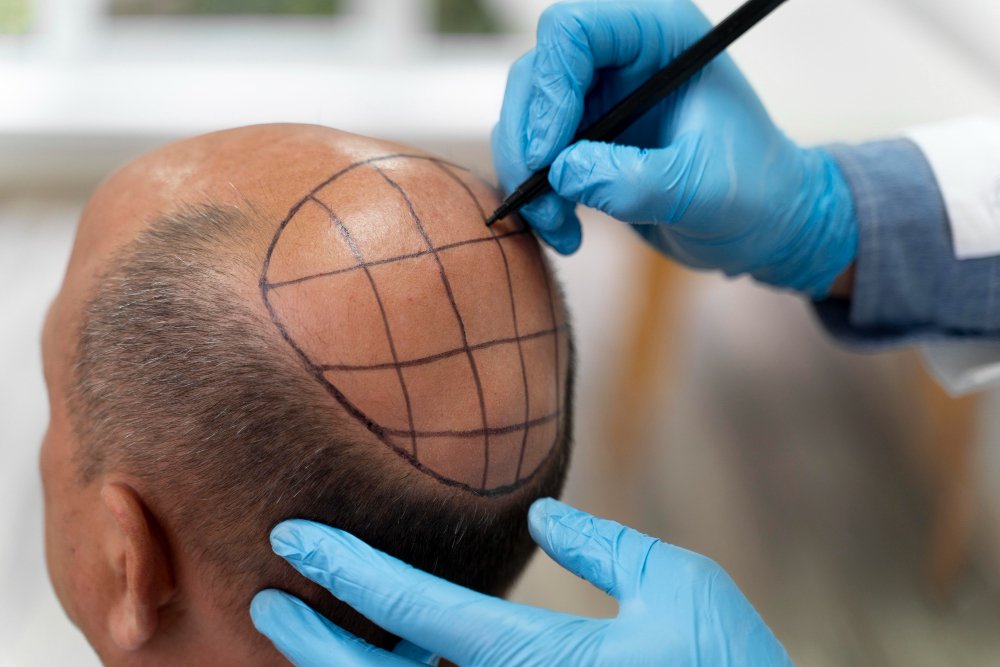
Hair Transplant
What is a Hair Transplant?
A hair transplant is a surgical procedure that moves healthy hair follicles from one part of the body (usually the back or sides of the scalp, known as the “donor area”) to areas where hair is thinning or completely lost (the “recipient area”). Unlike wigs or temporary solutions, transplanted hair grows naturally, can be cut or styled like regular hair, and lasts for a lifetime.
This procedure is most commonly performed for male-pattern and female-pattern baldness but can also restore hair in areas affected by injury, surgery, or certain medical conditions.
Who is the Right Candidate?
- ✅ Has noticeable thinning or baldness but still possesses healthy donor hair.
- ✅ Is in good overall health with no uncontrolled medical conditions.
- ✅ Has realistic expectations about the results.
- ✅ Has stable hair loss (not rapidly progressing).
- ✅ Men with male-pattern baldness, women with thinning hair, and patients with hair loss from burns or injuries may also benefit.
Different Types of Hair Transplant
- Follicular Unit Transplantation (FUT) – A strip of scalp is removed from the donor area, and hair follicles are separated under a microscope before being transplanted. Suitable for advanced hair loss and large graft sessions, but may leave a fine linear scar.
- Follicular Unit Extraction (FUE) – Individual hair follicles are extracted directly from the donor area and transplanted into the recipient site. Leaves no linear scar, recovery is quicker, and results are very natural, but the procedure can be longer and more costly.
Both FUT and FUE provide permanent results. The choice depends on patient preference, extent of hair loss, and surgeon’s expertise.
Preparing for Hair Transplant Surgery
- ✅ Medical evaluation to rule out underlying health conditions.
- ✅ Discussion of graft numbers, expected density, and realistic results.
- ✅ Avoid smoking, alcohol, and certain medications before surgery.
- ✅ Possible blood tests or scalp assessments as advised by the surgeon.
The Hair Transplant Procedure
The surgery is typically performed under local anesthesia and can take several hours, depending on the number of grafts needed.
- Donor Hair Extraction – Either by strip method (FUT) or individual follicle removal (FUE).
- Preparation of Grafts – Hair follicles are cleaned, sorted, and prepared for implantation.
- Recipient Site Creation – Tiny incisions are made in the thinning or bald area.
- Implantation – Follicles are placed in natural growth patterns for realistic results.
Transplanted hair usually sheds within a few weeks (normal process). New hair growth starts around 3–4 months, with final results visible within 9–12 months.
Recovery After a Hair Transplant
- ✅ Most patients return to work within a few days.
- ✅ Swelling, redness, or scabbing may occur but usually resolves in 1–2 weeks.
- ✅ Avoid direct sunlight and strenuous activity for a few weeks.
- ✅ Do not scratch or rub the scalp.
- ✅ Use prescribed medications to prevent infection and support healing.
- ✅ Attend follow-up appointments for best results.
Results and Longevity
Transplanted hair is permanent because donor follicles are resistant to baldness. However, natural hair loss in untreated areas may continue, so future sessions may be needed. With proper planning, results are long-lasting and natural-looking.
FAQs About Hair Transplant
1. Is a hair transplant painful?
No. It is performed under local anesthesia, so discomfort is minimal. Mild soreness afterward is manageable with medication.
2. How long does it take to see results?
New hair growth begins in 3–4 months, with full results in 9–12 months.
3. Will the transplanted hair fall out again?
The transplanted follicles are permanent, but untreated areas may continue thinning. Some patients may need touch-up procedures.
4. Is FUE better than FUT?
Both are effective. FUE avoids a linear scar and has faster recovery, while FUT allows more grafts in one session. Choice depends on patient needs and surgeon recommendation.
5. Can women also get hair transplants?
Yes. Women with thinning hair or localized bald patches can benefit. The procedure is tailored to their unique pattern of hair loss.