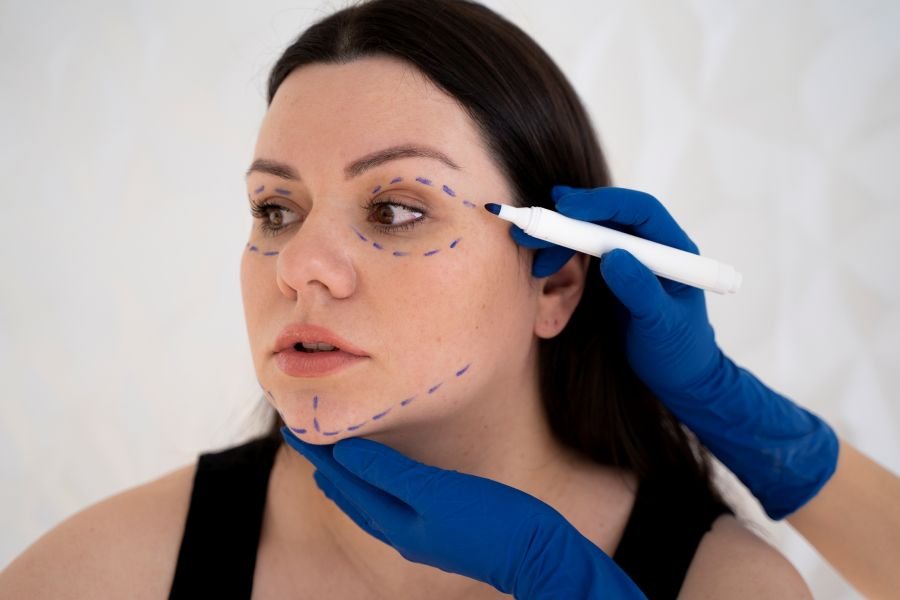
Facelift
What is a Facelift?
A facelift or rhytidectomy is a cosmetic surgery that improves visible signs of aging in the face and jawline. A properly performed facelift aims for a refreshed, natural look. It tightens loose skin, smooths deep folds, and repositions sagging tissues for a more youthful, refreshed appearance. The patients need to choose an experienced surgeon.
However, a facelift doesn’t stop aging, but it can “turn back the clock” by 7–10 years for many people. Doctors often suggest combining it with other procedures (like eyelid surgery, neck lift, or brow lift) for more complete results.
Who is the Right Candidate for a Facelift?
You may be a good candidate if you:
- ✅ Notice sagging cheeks, jowls, or loose skin on the jawline
- ✅ Have deep folds between the nose and mouth (nasolabial folds)
- ✅ Have excess skin or fat under the chin (double chin)
- ✅ Are in good health, don’t smoke, and have realistic expectations
Age itself isn’t the deciding factor — some people in their 40s may benefit, while others wait until their 60s.
Different Types of Facelift
There are several techniques, chosen depending on age, skin laxity, and goals.
- ✅ Traditional Facelift: Incisions start at the temples, go around the ear, and end at the lower scalp. It provides the most dramatic correction for sagging and deep folds.
- ✅ Mini Facelift: Smaller incisions, less invasive, good for mild sagging (often in younger patients). Recovery is shorter, but results are more subtle.
- ✅ Mid-Facelift: Focuses on lifting the cheeks and under-eye area. Best for patients whose main concern is sagging in the mid-face.
- ✅ Neck Lift: Targets sagging skin and bands in the neck, often performed with a facelift for balanced results.
Who should choose what?
- ✅ Younger patients (40s, mild sagging): Mini facelift
- ✅ Sagging cheeks and jawline: Mid or traditional facelift
- ✅ Older patients with significant sagging: Traditional facelift + neck lift
Preparation Before Surgery
Your surgeon will review your medical history, medications, and expectations. You may be asked to:
- ✅ Stop smoking weeks before surgery
- ✅ Avoid aspirin and blood-thinning medicines
- ✅ Get lab tests or medical clearance if needed
- ✅ Arrange for someone to drive you home and help during initial recovery
- ✅ Prepare your skin with a healthy routine as advised
The Surgery
Facelift surgery usually takes 2–5 hours and is done under general anesthesia or local anesthesia with sedation.
Steps include:
- ✅ Incisions are made near the hairline, around the ears, and sometimes under the chin.
- ✅ The surgeon repositions deeper tissues and removes or redistributes fat.
- ✅ Excess skin is trimmed, and the remaining skin is gently redraped for a smoother contour.
- ✅ Incisions are closed with sutures or staples.
Recovery After a Facelift
- ✅ First few days: Swelling, bruising, and tightness are normal. Keep head elevated and apply cool compresses.
- ✅ 1–2 weeks: Stitches are usually removed. Most people feel comfortable returning to light social activities.
- ✅ 3–4 weeks: Swelling decreases; you can resume most activities.
- ✅ 2–3 months: Final results become more visible as tissues heal and settle.
Results last: 7–10 years on average, but aging continues naturally.
Risks: bleeding, infection, scarring, nerve injury (temporary or rarely permanent), hair loss at incision sites, asymmetry.
FAQs
1. How long does a facelift last?
Results typically last 7–10 years, though aging continues naturally. Sun care, skincare, and a healthy lifestyle help maintain results.
2. At what age should I consider a facelift?
There’s no fixed age. Most patients are in their 40s–60s, but the best time is when sagging or folds bother you and less invasive options no longer work.
3. What’s the difference between a facelift and fillers?
Fillers add temporary volume and soften wrinkles but can’t lift sagging skin. A facelift repositions deeper tissues and removes excess skin for longer-lasting results.
4. Can men have facelifts too?
Absolutely. Men also benefit, though incisions are planned carefully to work with male hairlines and beard growth.
5. How soon can I go out in public?
Most people feel comfortable after 2 weeks, though swelling may take longer to fully settle. Endoscopic or mini facelifts may allow faster return.