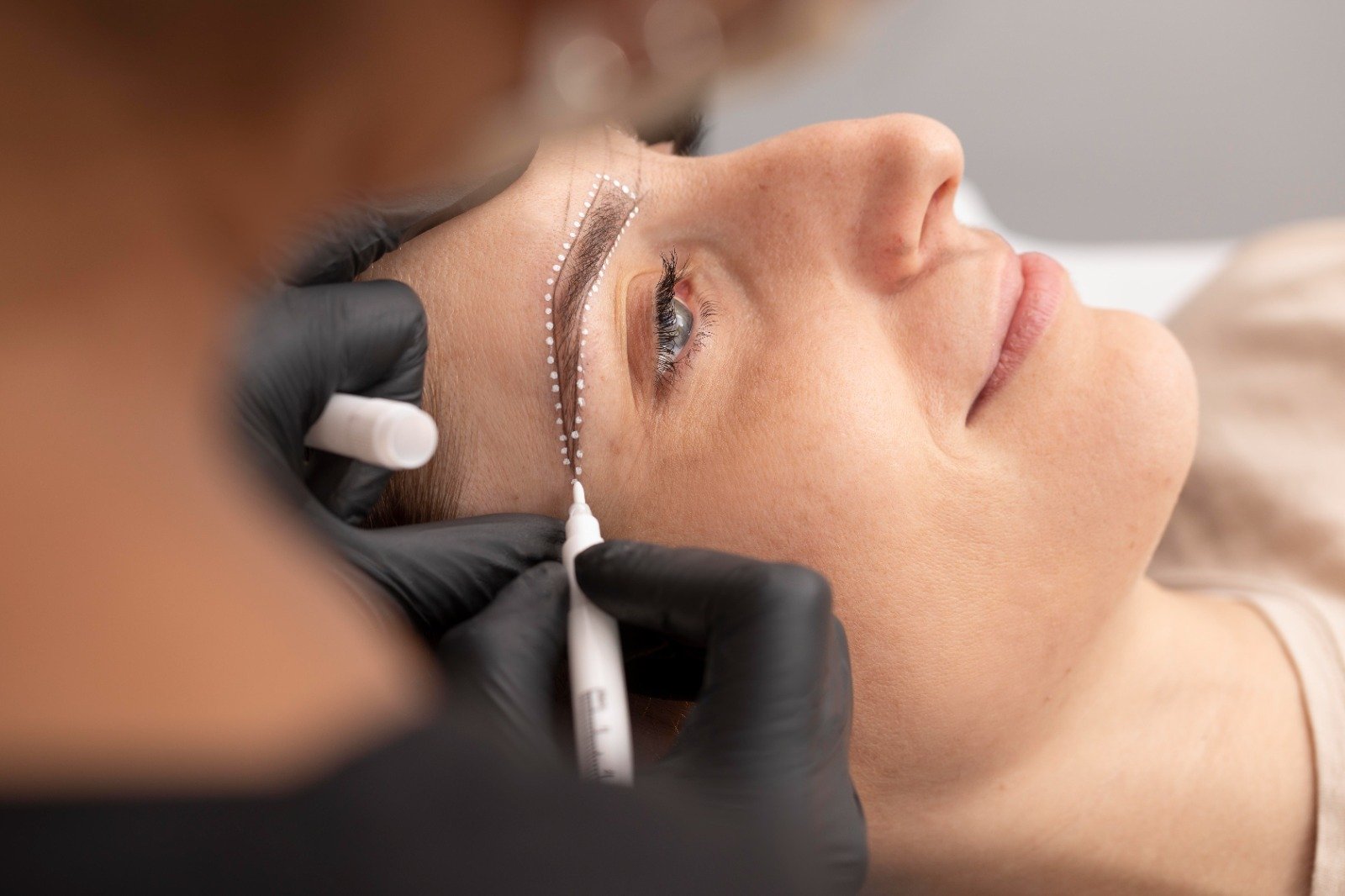
Brow Lift
What is a Brow Lift?
A brow lift (also called a forehead lift or browplasty) is a cosmetic surgery that raises the eyebrows and smooths the forehead. By lifting the soft tissue and skin of the forehead, it can reduce frown lines (the “11s” between the brows), soften horizontal forehead lines, and open up the eye area so you look more rested and alert. It doesn’t change your eye shape, and it’s different from eyelid surgery (blepharoplasty), which targets excess skin on the eyelids.
Who is the Right Candidate for a Brow Lift?
You might be a good candidate if you:
- ✅ Have sagging or heavy brows that make you look tired, angry, or stern
- ✅ See deep forehead wrinkles or strong frown lines
- ✅ Are in good general health, don’t smoke, and have realistic expectations
Your surgeon will review your medical history, examine your forehead/eyebrow position, and discuss goals. Sometimes a brow lift is combined with other facial procedures, but it can also be done alone.
Different Types of Brow Lift (and Who They Suit)
There are several techniques. Your surgeon will choose based on your anatomy, hairline, and goals.
- ✅ Endoscopic Brow Lift: Incisions start at the temples, go around the ear, and end at the lower scalp. It provides the most dramatic correction for sagging and deep folds.
- ✅ Temporal (Lateral) Brow Lift: Smaller incisions, less invasive, good for mild sagging (often in younger patients). Recovery is shorter, but results are more subtle.
- ✅ Direct Brow Lift: Focuses on lifting the cheeks and under-eye area. Best for patients whose main concern is sagging in the mid-face.
- ✅ Coronal (Open) Brow Lift: Targets sagging skin and bands in the neck, often performed with a facelift for balanced results.
- ✅ Hairline (Pretrichial) Brow Lift: The incision is placed at the front hairline—useful if your hairline is already high and you don’t want it moved higher. A faint line scar along the hairline is possible.
Quick matching guide:
- ✅ Want smaller scars and quicker recovery? → Endoscopic
- ✅ Outer brow droop only? → Temporal
- ✅ Very heavy/bushy brows or need high precision? → Direct
- ✅ Need a broad, powerful lift with a low hairline? → Coronal
- ✅ High/receding hairline, but want lift? → Hairline (pretrichial)
Procedure Before Surgery (Preparation)
Your first consultation covers your goals, options, photos, and exam. To prepare, surgeons commonly advise:
- ✅ Stop smoking weeks before surgery
- ✅ Avoid certain medicines/supplements that raise bleeding risk (e.g., aspirin)
- ✅ Arrange a ride home and help for the first day
- ✅ Plan time off work/exercise for recovery
- ✅ Sometimes, grow hair slightly to help hide early scars, depending on the technique. Your clinic will give you exact instructions tailored to you.
The Surgery (What Happens on the Day)
Brow lifts are usually outpatient procedures. You’ll receive local anesthesia with sedation or general anesthesia, depending on the technique. The surgeon makes the planned incisions (endoscopic small incisions; temporal near the temples; coronal across the scalp; hairline along the front hairline; direct just above the brow), releases and repositions tissues/muscles, and secures them. Incisions are closed with sutures or staples and covered with dressings. The procedure typically takes about 1–2 (sometimes up to 3) hours.
Risks (as with any surgery) include bleeding, infection, anesthesia reactions, asymmetry, numbness/changes in sensation, hair issues near incisions, elevated hairline, scarring, and rare nerve injury. Your surgeon will discuss these with you.
Recovering After a Browlift Surgery
Right after surgery, you’ll rest in a recovery area, then go home the same day with aftercare instructions. Expect some swelling, bruising, tightness, and tenderness for the first days to weeks. Keeping your head elevated, using cool packs as directed (not directly on incision sites), and taking prescribed/approved pain relief helps.
Typical timeline (varies by technique and whether it’s combined with other procedures):
- ✅ 1–3 days: Bandages may come off as instructed; continue head elevation and gentle care.
- ✅ 1–2 weeks: Many people feel comfortable returning to work or public activities. Endoscopic and limited/temporal lifts often have shorter downtime; open/coronal can be longer. If combined with a facelift or eyelid surgery, expect closer to 10–14 days before social activities.
- ✅ Several weeks: Avoid heavy lifting and strenuous exercise until cleared. Swelling continues to settle; temporary numbness/tingling usually improves.
- ✅ Months: Subtle settling and scar maturation continue; full results can take weeks to months, sometimes up to six months for final refinement.
FAQs
1. Will it raise my hairline??
It can, depending on the technique (coronal lifts often do). If your hairline is high, a hairline (pretrichial) lift can avoid further raising it.
2. Scars?
Surgeons place incisions to hide them (in the hair or along the hairline), but scars are permanent. They usually fade with time.
3. How long do results last?
Results are long-lasting, but skin continues to age; some lines may return over time. Sun protection helps maintain results.