Liposuction (Body-Contouring Surgery)
What is Liposuction?
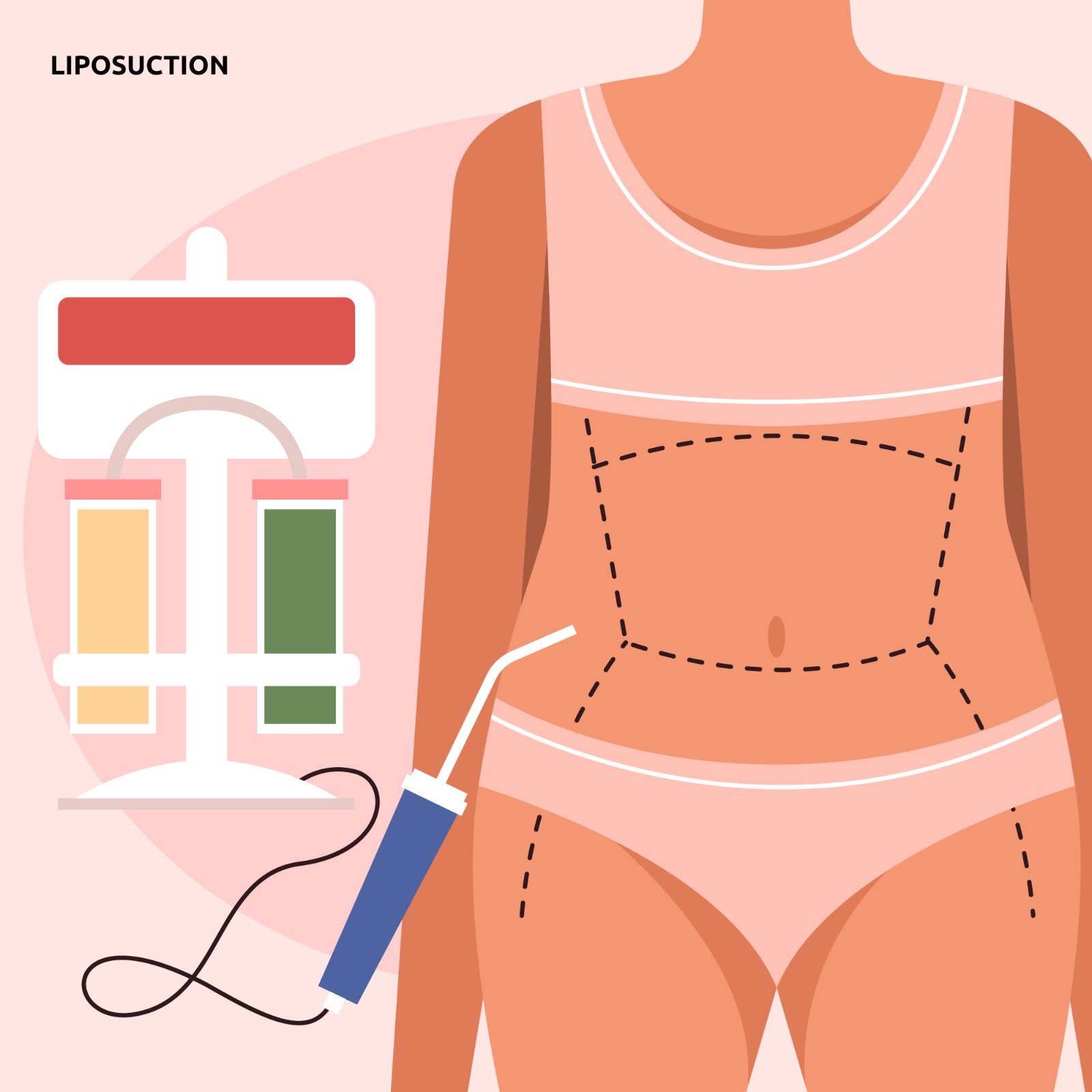
Liposuction is a body-contouring surgery that removes stubborn fat from specific areas to create a smoother, more defined shape. It is not a weight-loss procedure and does not treat obesity. Instead, it targets pockets of fat that do not respond to diet and exercise. Common areas include the abdomen, waist, hips, thighs, knees, arms, back, chest, and under the chin. By reducing localized fat, liposuction helps refine proportions and improve the way clothes fit, often boosting both confidence and comfort.
Who is the Right Candidate?
The best candidates are healthy adults who are close to their goal weight but bothered by specific bulges. Good skin quality matters because the skin must retract over the new contours after fat is removed. People with firm, elastic skin usually see the most even results. Candidates should be nonsmokers (or willing to stop before and after surgery) and have realistic expectations: liposuction shapes the body, it doesn’t replace healthy habits or fix loose, hanging skin. If you plan significant weight changes or pregnancy soon, it may be best to wait.
Areas That Can Be Treated
Liposuction can treat many regions, but safety and aesthetics guide the plan. The abdomen and flanks (“love handles”) are common targets because they strongly influence the waistline. Outer and inner thighs can be contoured to reduce rubbing and improve leg shape. Arms and the area under the chin respond well when skin tone is good. The back and bra-line can be smoothed, and in some men, chest reduction can be performed with liposuction if breast tissue is mostly fat. Your surgeon will evaluate each area’s skin quality, fat thickness, and balance with the rest of your body to choose the safest, most effective targets.
Techniques and Types of Liposuction
All modern liposuction begins with the tumescent step: a large volume of diluted local anesthetic with adrenaline is infiltrated into the fat. This firms the tissue, minimizes bleeding, and improves comfort. After that, different tools can be used to remove fat:
- Suction-assisted liposuction (SAL): The classic technique using small cannulas connected to a vacuum. Reliable and versatile.
- Power-assisted liposuction (PAL): Adds a gentle oscillation at the cannula tip, making fat removal more efficient and reducing surgeon fatigue, especially in fibrous areas like the back or male chest.
- Ultrasound-assisted liposuction (UAL): Uses ultrasound energy to liquefy fat before suction, useful in dense or previously operated areas.
- Laser-assisted liposuction (LAL): Applies laser energy to disrupt fat and may offer modest skin-tightening in select patients.
- Water-assisted liposuction (WAL): Uses a fluid jet to loosen and simultaneously remove fat, preferred by some surgeons for gentle, precise sculpting.
No single method is “best” for everyone. Anatomy and goals determine the choice, but equally important is the surgeon’s technique—layering, symmetry, and restraint to avoid irregularities.
Preparing Before Surgery
Preparation starts with a consultation and physical examination. You’ll discuss goals, medical history, and medications. Photos and measurements help with planning. Your surgeon may order lab tests and will advise you to stop blood-thinning medicines and supplements. If you smoke, you’ll need to stop, as nicotine impairs healing. A stable weight is recommended before surgery, since weight fluctuations can affect results. Arrange for a responsible adult to take you home and help for the first day. Prepare loose clothing, a rest area with your legs slightly elevated, easy meals, and a compression garment as instructed.
The Surgery Day
Liposuction can be done under local anesthesia with sedation for small areas or under general anesthesia for multiple regions. After marking contours, the surgeon injects tumescent fluid. Through tiny incisions hidden in natural creases, thin cannulas remove fat in even layers. The aim is smooth shaping, not aggressive removal. Incisions may be left open or loosely closed to allow drainage during the first day or two. A compression garment is placed immediately to limit swelling and help the skin conform to the new shape. Depending on the number of areas treated, surgery takes 1–3 hours, and most patients go home the same day.
Recovery and Aftercare
Expect swelling, bruising, and tightness for several days. Discomfort is generally managed with prescribed or over-the-counter medications. Light walking is encouraged the same day to aid circulation, but strenuous activity should wait until cleared—usually 2–3 weeks for most workouts, longer for high-impact exercise. Compression garments are typically worn full-time for two weeks, then part-time for a few weeks more. Bruising fades within two weeks, swelling improves steadily over 6–8 weeks, and firmness under the skin gradually softens. Desk work can often be resumed in 3–7 days. Early results are visible in weeks, but final contours refine over 3–6 months as swelling fully resolves.
Results and Longevity
Fat cells removed during liposuction do not grow back. However, remaining fat cells can still enlarge with weight gain. Results are long-lasting with stable weight and healthy habits. Many patients find liposuction improves clothing fit and motivates them to maintain good routines. Minor asymmetries between sides are normal, though careful planning minimizes them. If significant skin laxity exists, your surgeon may suggest combining liposuction with a lifting or tightening procedure for the best outcome.
Safety and Risks
When performed by an experienced surgeon in an accredited facility, liposuction is generally safe. Risks include bleeding, infection, seromas (fluid collections), numbness, contour irregularities, asymmetry, and rippling. Rare but serious complications like blood clots or fat embolism are minimized with careful patient selection, safe operative limits, proper technique, early ambulation, and adherence to guidelines. Following pre- and post-operative instructions is key to a safe recovery.
FAQs About Liposuction
- Will liposuction help me lose weight?
Liposuction is not a weight-loss procedure. It removes localized fat to improve shape and proportion. While the scale may drop slightly, the primary goal is contouring, not weight reduction. - How long until I see my final results?
Early changes are noticeable in 2–4 weeks, but swelling continues to settle for months. Final contours appear between 3 and 6 months after surgery. - What if my skin is loose—can liposuction tighten it?
Liposuction removes fat but does not directly tighten skin. Mild laxity may improve as swelling resolves. For moderate to severe laxity, combining liposuction with a lift or skin-tightening procedure is recommended. - Are the scars noticeable?
Incisions are tiny—just a few millimeters—and placed in natural creases. They generally fade well and are rarely a concern. - Will the fat come back?
Removed fat cells are gone permanently. However, remaining cells can enlarge with weight gain, which may change your contour. Stable weight helps maintain results long-term.